
If you live in an area where lanternflies are spreading, it’s crucial to know what a lanternfly looks like. This invasive insect poses a serious threat to agriculture, hardwood trees, and even backyard gardens. But before you can report or control them, you need to correctly identify them.
In this field guide, we’ll break down what lanternflies look like at each stage of life—and how Mosquito Sheriff can help protect your property from their damaging presence.
🐛 What Is a Lanternfly?
The spotted lanternfly (Lycorma delicatula) is an invasive pest native to Asia, now established in parts of the U.S., particularly the Northeast and Mid-Atlantic. It feeds on over 70 plant species, including grapes, maples, fruit trees, and ornamental plants—causing widespread damage and attracting mold and other pests.
🔍 How to Identify a Lanternfly: Life Stages
1. Egg Masses (Fall to Early Spring)
-
Appearance: Mud-like, gray or tan smears on tree trunks, rocks, fences, or outdoor equipment
-
Texture: Appears dry and cracked as it ages
-
Size: About 1 inch long, covered in a waxy coating
✅ Tip: Scrape and destroy egg masses when spotted.
2. Nymphs (Late Spring to Summer)
There are four nymph stages, each with slightly different appearances.
Early Instars (1st–3rd stages):
-
Color: Black with white spots
-
Size: Very small—less than ¼ inch
-
Movement: Quick and jumpy
Late Instar (4th stage):
-
Color: Bright red body with white spots and black legs
-
Size: About ½ inch
-
Easily Mistaken For: Other beetles or colorful true bugs
3. Adults (Late Summer to Fall)
This is the most recognizable stage.
-
Size: 1–1.25 inches long
-
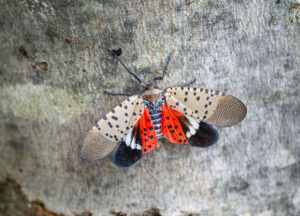
Wings Closed: Gray forewings with black spots; wingtips have a net-like pattern
-
Wings Open: Bright red hindwings with black and white bands—very noticeable when flying
-
Body: Yellow abdomen with black bands
✅ Key Identifier: That striking red underwing is hard to miss during flight or when startled.
🛡️ Why Early Identification Matters
Lanternflies reproduce rapidly and can spread across counties and states in just one season—often hitching rides on vehicles, firewood, or outdoor furniture. Early detection helps stop the spread and prevent ecological damage.
🧪 How Mosquito Sheriff Can Help with Lanternfly Control
At Mosquito Sheriff, we don’t just handle mosquitoes—we’re also equipped to manage invasive pests like the spotted lanternfly. Our services include:
-
Inspection of your property for egg masses and infestations
-
Eco-friendly treatment options safe for pets, children, and wildlife
-
Ongoing seasonal plans to protect trees, vineyards, and landscaped areas
If you think you’ve seen a lanternfly on your property, don’t wait. Reporting and treating early can make all the difference.
🧠 More Helpful Resources
✅ Final Thoughts
So, what does a lanternfly look like? Now you know! From egg masses to adults, each stage has distinct markings that can help you catch an infestation early. And with help from Mosquito Sheriff, you can ensure your home or farm stays protected from this destructive invader.
👉 Contact Mosquito Sheriff today to schedule a lanternfly inspection or get started with a treatment plan.