
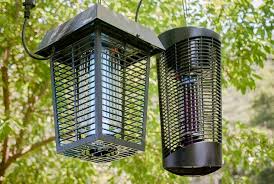
 The question do bug zappers work in Maryland comes up often for homeowners trying to reduce mosquitoes during humid summers. While bug zappers are widely marketed as an easy fix for outdoor insects, their effectiveness against mosquitoes—especially in Maryland’s coastal and humid environment—is limited.
Understanding how they actually work helps explain why they often don’t solve mosquito problems.
How bug zappers actually work
Bug zappers use ultraviolet (UV) light to attract insects. When insects fly toward the light, they are killed by an electric grid.
However, the key issue is that mosquitoes are not strongly attracted to UV light. Instead, they are primarily drawn to:
- Carbon dioxide from breath
- Body heat
- Sweat and skin odors
This means most insects killed by bug zappers are typically non-biting species like moths and beetles—not mosquitoes.
More general mosquito behavior is explained by the CDC Mosquito Information.
Why bug zappers struggle in Maryland
Maryland’s environment—especially in areas like Anne Arundel County—creates ideal mosquito conditions that bug zappers don’t address:
High humidity and standing water
Mosquitoes breed in stagnant water found in yards, storm drains, and wetlands.
Coastal and marsh environments
Chesapeake Bay marshes and tidal areas support large mosquito populations.
Dense vegetation
Shaded, humid yards provide resting areas that zappers don’t affect.
Because bug zappers don’t target breeding sites, they do not reduce overall mosquito populations.
What bug zappers do catch
Studies and field observations show that bug zappers often kill:
- Moths
- Beetles
- Non-biting flies
- Other harmless insects
This can sometimes reduce beneficial insect populations, including pollinators.
Better mosquito control methods for Maryland homes
Instead of relying on bug zappers alone, more effective mosquito control focuses on disrupting breeding and resting areas:
Eliminate standing water
Empty containers, clean gutters, and remove pooled water after rain.
Maintain yard vegetation
Keep grass short and trim dense shrubs where mosquitoes rest.
Improve drainage
Fix low spots in yards that collect water.
Use targeted mosquito treatments
Professional mosquito control services focus on breeding sites and resting zones rather than random insect attraction.
For EPA-recommended strategies, see the EPA Mosquito Control Guidance.
Why Maryland homeowners still use bug zappers
Despite their limitations, bug zappers remain popular because they:
- Are inexpensive
- Are easy to install
- Provide visible results (insect debris)
- Offer a sense of control outdoors
However, visible insect reduction does not necessarily mean fewer mosquito bites.
Final takeaway
Bug zappers may kill some flying insects, but they are not an effective mosquito control solution in Maryland. Because mosquitoes are driven by scent, heat, and breeding water—not light—they require a different approach focused on environmental control.