

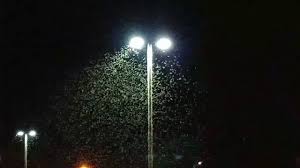
Streetlights and mosquitoes NJ is a concern many homeowners in Middlesex County notice during warm evenings, especially when mosquitoes seem more active around lit streets and backyard lighting. While streetlights do not directly “create” mosquitoes, they can influence mosquito behavior and make bites feel more frequent in residential areas.
Many homeowners in New Jersey observe that mosquitoes seem worse near illuminated areas at night. While it may look like the lights are directly causing mosquitoes, the reality is more complex and involves human activity, environmental conditions, and nearby breeding sites.
If you’re dealing with recurring mosquito issues, professional yard treatments like those offered through your local mosquito control service can help reduce overall populations.
Do Streetlights Actually Attract Mosquitoes?
Streetlights don’t directly attract mosquitoes in the same way they attract moths or other insects. However, they can still contribute to increased mosquito activity in indirect ways.
For example, streetlights attract insects like gnats and midges. As a result, mosquitoes often follow because these insects are part of the local ecosystem food chain. Additionally, lighted areas tend to become gathering spots for people, which increases carbon dioxide and body heat—two major mosquito attractants.
Therefore, it’s not just the light itself, but everything happening around it that can increase mosquito presence.
Why NJ Neighborhoods Notice It More
In suburban areas of New Jersey, especially in places like Middlesex County, streetlights are often close to residential yards, sidewalks, and shared green spaces.
Because of this layout, mosquitoes don’t have far to travel between:
- Breeding areas (standing water, drains, ponds)
- Vegetation and shaded resting spots
- Lighted areas where people gather at night
As a result, residents often feel like mosquitoes are “swarming lights,” when in reality they are simply following normal activity patterns in a compact suburban environment.
Light, Heat, and Human Activity
Streetlights also produce a small amount of heat. While this heat alone is not a major attractant, it can slightly influence mosquito behavior when combined with other factors like humidity and human presence.
More importantly, lights extend outdoor activity into evening hours. Since mosquitoes are most active at dusk and night, this overlap increases the chance of bites.
According to the Centers for Disease Control and Prevention (CDC), mosquitoes are especially active during dawn and dusk, which makes evening lighting a key factor in exposure timing.
Standing Water Is Still the Real Problem
Even though lighting can influence mosquito behavior, the primary driver of mosquito populations is still standing water.
In many NJ neighborhoods, mosquitoes breed in:
- Clogged gutters
- Storm drains
- Retention ponds
- Birdbaths
- Yard containers
Streetlights may change where mosquitoes are seen, but water sources determine how many exist in the first place.
What Homeowners Can Do
If streetlights near your home seem to increase mosquito activity, a few practical steps can help reduce exposure:
- Use warm-toned outdoor lighting instead of bright white LEDs
- Limit unnecessary lighting in backyard spaces
- Avoid staying outdoors near lit areas during peak mosquito hours
- Eliminate standing water around the property
- Maintain landscaping to reduce shaded resting areas
For more prevention guidance, the Environmental Protection Agency (EPA) provides helpful information on mosquito repellents and control methods.
When Professional Control Makes the Difference
While DIY steps can help reduce bites, they often don’t address the full mosquito population around a property. Professional mosquito control focuses on treating resting areas and breeding zones to reduce overall pressure in your yard.
This is especially helpful in suburban environments like Middlesex County, where mosquitoes can quickly move between properties and re-establish populations.
Final Thoughts
Streetlights don’t directly attract mosquitoes, but they do contribute to conditions that make mosquito activity more noticeable—especially in active suburban areas of New Jersey. When combined with humidity, standing water, and evening outdoor activity, the effect becomes much more obvious to homeowners.
By understanding the real causes behind mosquito behavior, residents can take smarter steps to reduce bites and improve outdoor comfort throughout the season.